


WINDSHIELD CALIBRATION: A SAFETY ISSUE

(Article published in L’AUTOMOBILE Collision magazine, April 2024)
By Marc Bardiaux
The windshield, which until recently was merely a window to the outside world, has given way to a high-tech component designed to ensure the safety of a vehicle and its passengers.
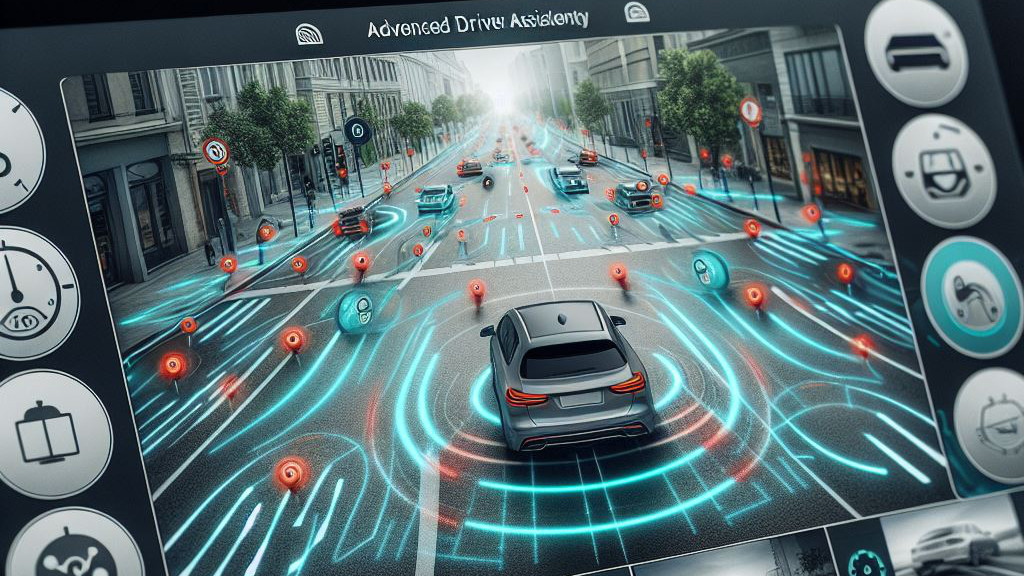
Advanced driver assistance systems (ADAS) are standard equipment on most new vehicles, and will become a must-have in the near future. A range of radars, lidars and cameras analyze the immediate environment and act in various ways to prevent or avoid potentially dangerous situations. For example, the forward collision warning system warns the driver when they are getting too close to another road user, and will even apply the brakes if there is no human reaction. Other features monitor blind spots, lane keeping and the presence of various surrounding obstacles.
All these systems operate through the windshield: they must therefore be perfectly aligned with the vehicle’s trajectory and properly calibrated for distance calculation in order to function optimally. The opposite would exponentially increase the risk of an accident. The front collision avoidance system could, for example, over- or under-estimate the distance between the two vehicles, resulting in late or unexpectedly premature braking, with potentially disastrous results.
Automatic Calibration: Why and How?
After replacing the windshield, or following a collision or repairs to the steering or suspension, it becomes necessary to check that the ADAS are working properly, and if necessary recalibrate them. Automatic calibration adjusts all these systems autonomously, for greater precision and reduced intervention time. To start the procedure, simply identify the vehicle and its ADAS, place claws on the wheels and orient the calibration screen in front of the vehicle. The only thing left to do is to define the targets to be reached for each component and start the process.
However, this procedure is only possible if the physical components (radar, lidar, etc.) are in good condition and correctly oriented. If this is not the case, a physical intervention will have to be carried out before launching the automatic calibration procedure. At all times, it will also be the driver’s or technician’s responsibility to note any inappropriate behaviour or unexpected reaction suggesting an ADAS malfunction, and to act accordingly.
The future of automatic calibration looks bright with the integration of artificial intelligence and autonomous learning. This technology will undoubtedly help to make driving safer, and enable professionals in the industry to offer a higher quality of service, for the well-being of all.